
Magic Knows No Gender: Honouring the Female Magicians of the World
Female Entertainers
Last Updated:
Post Created:
Magic is a field that has traditionally been dominated by men, from Houdini to David Blaine, from David Copperfield to Criss Angel, with women often confined to the role of “glamorous” assistants or spectators. However, throughout history, there have been female magicians who defied the norms and pursued their passion for magic. They faced many challenges, including prejudice and discrimination, but they also inspired generations of other women to pursue their dreams of careers in magic.
As part of my Master’s thesis, I touched on female entertainers in 17th-century London, especially rope-dancers, or, as we now know them, tightrope walkers. This is a bit misleading, though, as the acts went beyond just walking on a rope to include dancing, carrying objects, and even pushing a wheelbarrow carrying children!
Regarding female entertainers, there was the “threat of the unknown”. Female rope-dancers were classed as more dangerous due to being “explosive or easily inflamed, especially because they were ruled by their uteruses.” Medical treatises of the period saw dancing as a cause of medical problems in women, especially the uterus, causing bleeding and ultimately miscarriage when pregnant.1
Blame was also placed on women for males’ lustful gaze upon them. Anu Korhonen suggests that women are forthcoming and, by being in the public eye, they know men will look upon them, with “beautiful women almost a tourist attraction”, authorising “men to look at women, to desire them”. Pepys even wrote in his diary regarding a female rope-walker he saw at a show that he was “most pleased to see the little girl dance in a boy’s apparel, she having very fine legs”. Despite sexualization, many female performers went on to become household names and tour independently.
In modern-day magic, this “male gaze” remains prominent, with women often, as mentioned, relegated to the role of assistants, required to look attractive and serve as a visual spectacle, while the male magician takes centre stage and receives all the credit. A quick Google image search brings up scantily dressed women
In spite of this, women have made their mark in the industry throughout history, though not without struggle. Sarah Cox from Goldsmiths University wrote that women were perceived as worse magicians than men, despite having the same skills. This may show that there are still “entrenched biases in wider society, such as stereotypes about women being weak or less in control”3
Among the reasons women may not have risen to prominence is the culture behind magic. The Magic Circle in London only opened its doors to female members for the first time in 1991. Magic clubs throughout the country still feel like old boys’ clubs, with a majority of members being senior men.
Even recently, I, as part of a choir I sing with, took part in a community choir festival. The elderly compere had to make disparaging remarks on stage about the all-female choir, and how “pretty they were” (not exactly, but you can guess).
Female Magicians
The lack of representation of women in magic may also have other reasons. Is it just that more males take up the hobby because it is still perceived as a bit geeky? In the past, women practising “magic” were called witches, so maybe there is still a connection that led women not to take up magic in its early history as an art form.
A lot of published magic assumes you are a male wearing a suit jacket, with tricks designed just for that. The variety of magicians’ wallet products on sale is immense. I have never seen a purse effect like this before. As they know, they won’t be able to sell many, I guess.
There are very few female role models to look up to. However, things are changing slowly, and there have been some amazing female magicians who have broken barriers and inspired others with their talents. Here are five female magicians who have made significant contributions to the industry:
Adelaide Herrmann (1853-1932)
Adelaide was known as the Queen of Magic and broke down barriers in the male-dominated world of magic. Born in London, she moved to the USA, met and married the famous magician Alexander Herrmann, and began working as his assistant. Unfortunately, he died at a young age when she was still in her 40s. Instead of just giving up, she decided to carry on with magic, performing till she was in her 70s!
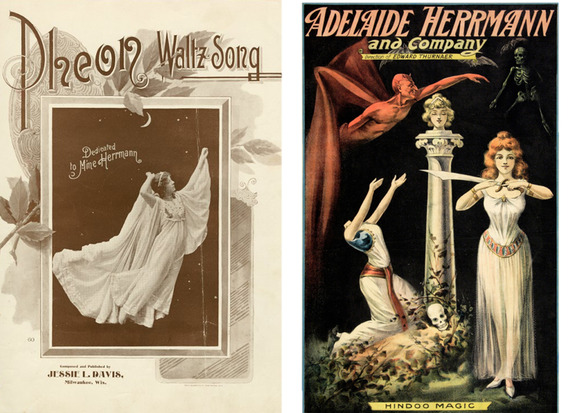
She was known for many grand illusions and performing the death-defying bullet catch, a trick that has claimed the lives of several performers. A true pioneer in women’s equality, she is quoted as saying, “I shall not be content until I am recognised by the public as a leader in my profession, and entirely irrespective of the question of sex .3
In 1926, disaster struck when a deadly fire broke out in her warehouse. This contained all her props, 200 crates of costumes, and the animals she used in her performances. She managed to rebound for a short while before retiring.
Fay Presto
Fay Presto (Letitia Winter) is a British magician who has made a significant impact on the world of magic, particularly within the LGBTQ+ community. Fay started performing magic in the 1970s, whilst in her 30s, and is known for her close-up magic performances, often appearing at exclusive events and private parties. She has also been personally invited multiple times to perform for the Queen.
In 2012, she won the title of ‘The Magic Circle Close-up Magician of the Year’
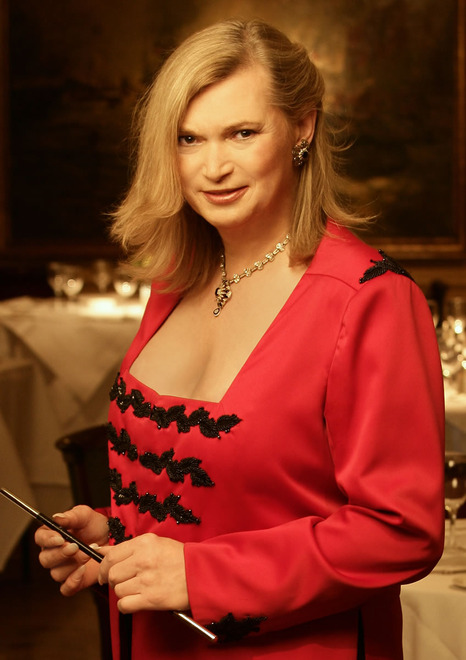
As a transgender woman, she has been an advocate for LGBTQ+ rights throughout her career. Fay Presto’s openness about her gender identity and advocacy work has made a significant impact on the world of magic. Fay has been recognised for her work in promoting diversity and inclusivity within the industry, and she continues to inspire and mentor aspiring magicians to this day. Fay Presto’s legacy in the world of magic is undeniable, and she remains a beloved figure in the magic community.
Dorothy Dietrich
Dorothy is an American stage magician and escapologist. She is best known for performing the bullet catch and for being the first woman to escape a straightjacket. This was performed while suspended high in the air from a burning rope.
In her own words, the seeds of escapology were sown early on in her life: ” I always wanted to be one of the guys, and I was the girly girl, frail. They would only let me play with them if I would let them tie me up for cops and robbers or cowboys and Indians. I thought that was cool. I didn’t mind it at all. I would escape every time.” Of interest is once again the idea that magic is not a feminine thing. Later, when she was trying to make a name in the industry, agents would say, “They just couldn’t see a girl doing magic” 4
Dorothy advertised that she was the only woman to perform the bullet catch with a bullet caught in her mouth. In 1980, she was booked to perform her version of the bullet catch for the International Brotherhood of Magicians and was featured on the TV show Evening Magazine. She even allowed an independent committee to buy and bring the bullets under guard.
In 2016, Dietrich was bestowed with “The Society of American Magicians” rare Presidential Citation for their work in promoting the art of magic.
Carisa Hendrix
Carisa is not just a magician, but a multifaceted entertainer, with skills including juggling and fire-eating, to name two. She even set the Guinness World Record for the longest time she could hold a lit torch in her mouth back in 2012!
Hailing from Canada, she is known for her alter ego, Lucy Darling, in which she combines razor-sharp wit, impeccable sleight of hand, and a dose of playful, sharp-tongued humour.
Carisa has been featured in the press many times in articles about the rise of female magicians and, in 2019, won the prestigious Magic Castle Stage Magician of the Year.
Find out more at Carisa Hendrix’s Website
Katherine Mills
Katherine Mills is a magician who has gained recognition in recent years. She has appeared on various television shows and performed for high-profile clients such as Google and Coca-Cola; she was the first woman magician to gain her own prime-time show in the UK with ‘Katherine Mills: Mind Games’ in 2014.
Katherine is also an advocate for women in magic and has spoken out about the challenges faced by female magicians in a male-dominated industry. In an interview with the Guardian, she states regarding magic clubs, as I mentioned above: “The older magicians were particularly intrigued to find out how good I was and what kind of magic I was doing, just because I was female. There is that extra element of proving yourself, more judging eyes on you.”
And many more….
This is just a short list of four, but there are many more, such as Laura London, Romany, Magic Babe Ning, & Ariann Black. If you are looking for a local female magician, I can recommend my friend Bethan Sims Magic! For all-over magic enquiries – Contact me!
1: Anne Wohlcke, The Perpetual Fair, p. 40.
2: Women seen as inferior magicians despite identical skills | Goldsmiths, University of London https://www.gold.ac.uk/news/magic-and-gender/
3: She Caught Bullets with Her Bare Hands — and Made Magic’s Glass Ceiling Disappear, https://narratively.com/she-caught-bullets-with-her-bare-hands-and-made-magics-glass-ceiling-disappear/
4: Dorothy Dietrich – Wikipedia
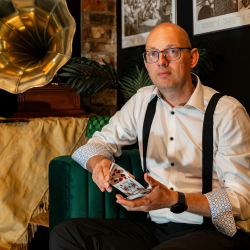
Away from the stage, Adrian holds a Master's degree in Early Modern History from the University of York and occasionally volunteers at York Castle Museum in Victorian costume. When he's not performing magic, you'll usually find him building models, reading, gaming, or exploring his passion for history.
- Autumn Wedding Fairs – Come and Experience Close-Up Magic Live - 14/09/2026
- The Truth Behind Psychic Mediums: A Magician’s Perspective - 28/08/2026
- Grand Villa Heights – Coastal Wedding Magic - 09/07/2026