
The History of Pulling a Rabbit Out of a Hat: The Origin of a Classic Magic Trick
Last Updated:
Post Created:
When someone thinks of a magician, one image comes to mind. Ask everyone, and many will have the same answer – A magician pulling a rabbit out of a top hat.
Pulling a rabbit out of a hat is one of the most iconic and recognisable magic tricks of all time. This iconic and timeless trick has captivated audiences for centuries. But how did it start, and how did it become so popular
The origin of the phrase “pulling a rabbit out of a hat” is not very clear. There are various theories and claims about who the first magician to perform this trick was. However, according to some sources, the first magician to pull a rabbit from a top hat might have been Louis Apollinaire Christian Emmanuel Comte, known as ‘The King’s Conjurer’.

Born June 22, 1788, in Geneva, Switzerland, Comte became a popular Parisian performer. He was known for his skilful sleight of hand and his elegant style. He was also one of the first magicians to use music and lighting effects in his shows.
Comte reportedly performed the rabbit out-of-the-hat trick for King Louis XVIII in 1814. He used an ordinary top hat that he borrowed from one of the courtiers. He showed that the hat was empty and then produced a live rabbit from inside it.
His feat inspired other magicians, such as John Henry Anderson, known as ‘The Great Wizard of the North’. Anderson was born on July 14, 1814, in Scotland. He became one of the most successful and influential magicians of the 19th century, travelling around the world performing for royalty, celebrities, and large audiences.
Anderson is credited with being the first magician to pull a rabbit out of a top hat on stage, using a specially designed hat with a hidden compartment for the rabbit.
Anderson’s version of the trick became very popular and widely copied by other magicians. It also helped to establish the top hat as a symbol of magic and mystery. The trick became a staple of stage magic shows and circus acts.
An interesting historical footnote to the rabbit-out-of-the-hat trick is the case of Mary Toft, an English woman who, in 1726, fooled many doctors and even the king’s surgeon into believing that she had given birth to rabbits. She claimed that she had developed a craving for rabbit meat after seeing one while pregnant and that this had influenced her unborn child. However, she was later exposed as a fraud when it was discovered that she had inserted dead animal parts into her body before pretending to give birth to them.

Mary Toft’s hoax caused widespread embarrassment and ridicule for the medical profession and the public at large. It also raised questions about the credibility and reliability of scientific evidence and testimony. Some historians have suggested that Mary Toft’s case may have influenced some magicians to perform the rabbit out of the hat trick as a satire or parody of her deception.
While Louis Comte and John Henry Anderson solidified the rabbit’s place in history, one might wonder why the rabbit became the definitive choice over, say, a cat or a guinea pig!. Beyond the Mary Toft satire, rabbits are perfect for the stage; they are naturally quiet and easily made to stay still.
A Modern Shift in Magic Ethics
In recent years, the ethics of using live animals in magic have undergone a significant transformation. While the image of a magician gripping a rabbit by its ears is a common caricature, modern audiences—and magicians—recognise this practice as outdated and harmful. Today, animal welfare is a priority; the Magic Circle and other professional bodies have strict guidelines ensuring that when animals are used, they are handled with the utmost care, properly supported from beneath, and never subjected to distress. Many contemporary performers have moved away from live animals entirely. This shift reflects a broader respect for animal welfare, proving that magic can evolve while still honouring its most storied traditions
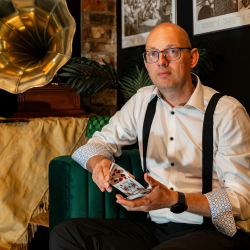
Away from the stage, Adrian holds a Master's degree in Early Modern History from the University of York and occasionally volunteers at York Castle Museum in Victorian costume. When he's not performing magic, you'll usually find him building models, reading, gaming, or exploring his passion for history.
- Autumn Wedding Fairs – Come and Experience Close-Up Magic Live - 14/09/2026
- The Truth Behind Psychic Mediums: A Magician’s Perspective - 28/08/2026
- Grand Villa Heights – Coastal Wedding Magic - 09/07/2026