
Spooky Magic History & Some Chilling Performances
Last Updated:
Post Created:
It is October as I write this—Spooky Season. The days are getting shorter and colder; the pumpkins are out, and thoughts turn naturally to Halloween.
During Halloween, people believe that the veil between the living and the supernatural becomes thinner, creating the perfect backdrop for spine-chilling magic performances.
I’ve been obsessed with the idea of creating my own bizarre, spooky magic show for a while now. I love all things dark and macabre! Early in my magical journey, I was part of a spooky stage magic act with my friend Robin (Martiny’s Magic, based in Cumbria), and later, I co-created a Victorian-style spooky magic show with my late friend and magician Craig. Recently, a bizarre storytelling lecture at York Magic Circle and watching a bizarre magic show in Harrogate re-ignited my interest.
Throughout history, magicians have used this eerie time to captivate and thrill audiences with their spooky acts. Here are some historical spooky magic performances:
The Historical Roots of Spooky Magic
Victorian Séances
In the Victorian era, séances were a widely popular form of entertainment that blended elements of magic and spiritualism. “Mediums” claimed to be able to communicate with the dead, though of course, many, if not all, used typical tools of the mentalist and conjurer, such as cold reading and invisible threads connected to bells, and even having a hole in their shoes, where the mediums’ toes could help pick things up or even play a tambourine!
You can read my article on fake mediums here.
Spiritualists later adopted the “much-feared” Ouija board as a tool to contact the dead, but they began as playful parlour games. When genuine belief meets artful deception, the result is a potent force.
Phantasmagoria Shows
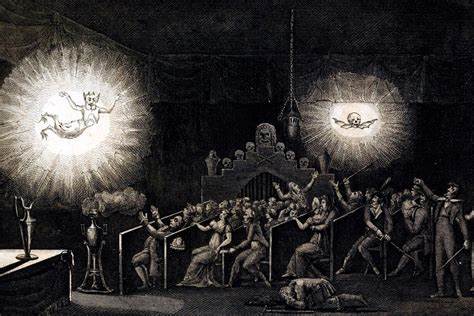
The 18th and 19th centuries saw the rise of Phantasmagoria shows, terrifying spectacles in which lanterns projected ghostly images—skeletons and other spectral figures—onto walls or smoke. These shows often included eerie sound effects, smells, and dramatic lighting to create a terrifying atmosphere. With the rise of the gothic in the late eighteenth century, people became obsessed with emotions, the irrational and the bizarre.
Visionaries such as Edmé-Gilles Guyot and Étienne Gaspard Robert conceived the idea and apparatus for projecting these ghostly images. Guyot projected his images onto smoke, while Robert created the Phantoscope – a wheeled device that allowed the projection of multiple images at once and the ability to change the size of the images with the lens.
The Grand Guignol Theatre
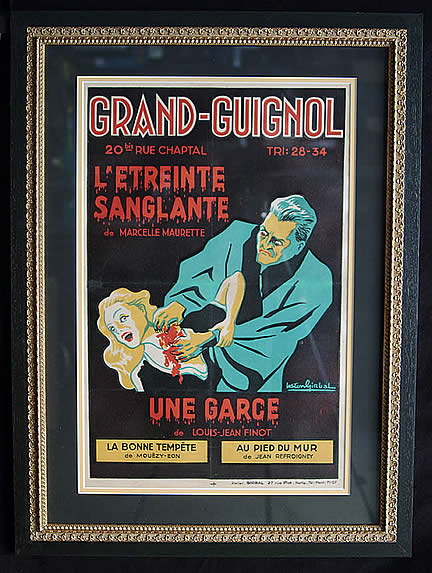
The Grand Guignol Theatre, which started in Paris around the end of the 19th century, was a theatre that gained worldwide fame for its short, very graphic, and sometimes bloody horror plays, running from 1897 to 1962, not far from the Moulin Rouge. The second owner of the theatre was Max Maurey, who developed it into the home of grotesque horror stories based on actual crimes.
Development by actor Paul Ratineau drew on magic illusions, including realistic congealing fake blood, the removal of eyeballs and arms, and skin being flayed!
Spook Shows
In the mid-20th century, spook shows, or Midnight Ghost Shows, became a staple of Halloween entertainment. These were travelling stage shows that combined live, spooky magic performances, simulated séances, and screenings of horror films, creating a full-on, interactive, scary experience for audiences.
Elwin-Charles Peck 1is said to have created the idea in 1929, putting on shows at the end of the day when all the other acts had gone home. He would use standard magic tricks, and then, to keep the audience on the edge of their seats, he would black out the theatre and have spooky things fly around. Later on, things became less serious but perhaps more elaborate, with bigger tricks and even a horror movie being played. With the advent of television, these shows started to fall out of fashion. When you saw The Exorcist at the movies, did a plastic skeleton hold the same fear?
The Rise of “Bizarre Magic” (1960s-1970s & Beyond)
After the grand, stage-based Spook Shows faded, a new, more psychological and intimate form of performance magic emerged: Bizarre Magic, often spelt Magick to distinguish itself from other types of magical performance. A key feature is the use of storytelling and connecting with the audience on a deeper level through themes such as the occult, folklore, true crime, disasters and horror literature/ films.
People connected to the development include Charles Cameron and Tony “Doc” Shiels, and Tony Andruzzi, who edited a bizarre magic publication, The New Invocation. Andruzzi also created bizarre magic conventions, held annually in Chicago from 1984 to 1990.
Some Spooky Magic Performances & Performers
1. Eugene Burger’s Performances
Eugene Burger was an American magician famous for his eerie, thought-provoking, bizarre magic performances. His storytelling skills turned his magic shows into profound, almost mystical experiences. He would delve into the rich tapestry of folklore, mythology, and his personal experiences to create deeply resonant performances that often blurred the lines between magic and reality. Eugene Burger sadly passed away in 2017, but leaves a lasting legacy among magicians.
2. Derren Brown’s Séance
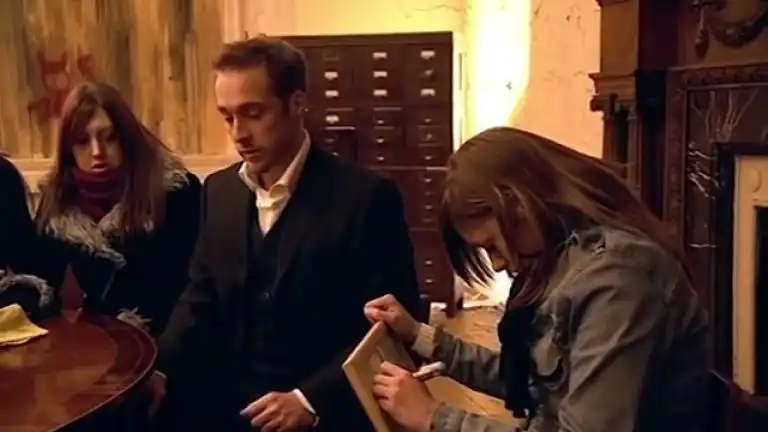
In 2004, Channel 4 aired Derren Brown’s “Séance“, a television special that simulated a live séance. Brown invited a group of students to participate in the séance at a disused hospital – spooky already! Derren explained to his volunteers that the halls had a history of paranormal activity following the suicide pact of twelve people in 1974. The show combined elements of suggestion, psychology, and traditional séance tricks to create a compelling experience that received 700 complaints2, the most complained about then in TV history!!!
3. David Blaine’s Needle Through Arm
David Blaine made his name on TV performing magic to unsuspecting people on the streets. He performed daring endurance stunts such as sitting inside a frozen block of ice or being displayed in a large, clear Perspex box without food. The needle-through-the-arm trick is an older effect created by Bruce Spangler and popularised by magician and actor Harry Anderson. David Blaine, on the other hand, seemed to do it for real right in front of a shocked Ricky Gervais on his TV show Real or Magic…
4. Kevin James sawing in half
Kevin James is a stage magician known as “The Inventor”. He has a crazy scientist persona on stage, and one of his stand-out tricks is his version of the classic sawing-a-person-in-half illusion invented by P. T. Selbit in 1921. This version takes things to an extreme when half a body awakens… Just watch this!
5. Sacred Riana
Sacred Riana (born Marie Antoinette Riana Graharani) is an Indonesian magician known for unsettling, bizarre, haunting performances, having impressed on both Asia’s Got Talent and America’s Got Talent. What do you think of her performances…
- Rocky Horror Has Roots in Spook Shows and Victorian Seances – Atlas Obscura ↩︎
- BBC NEWS | Entertainment | TV and Radio | Hundreds protest at TV ‘seance’ ↩︎
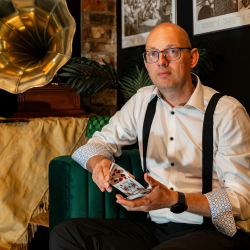
Away from the stage, Adrian holds a Master's degree in Early Modern History from the University of York and occasionally volunteers at York Castle Museum in Victorian costume. When he's not performing magic, you'll usually find him building models, reading, gaming, or exploring his passion for history.
- Autumn Wedding Fairs – Come and Experience Close-Up Magic Live - 14/09/2026
- The Truth Behind Psychic Mediums: A Magician’s Perspective - 28/08/2026
- Grand Villa Heights – Coastal Wedding Magic - 09/07/2026