
Unveiling the Secrets: The 19 Types of Magic Revealed
Last Updated:
Post Created:
Have you ever seen a magician (if not, HELLO!!) pull a coin from behind someone’s ear? Or perhaps levitate, or even make the Statue of Liberty vanish?
Magic has captivated audiences for centuries, making us wonder, “How on Earth did they do that?!”
But how many tricks are there exactly? Probably too many to count, to be honest, but magic can be split up into different genres or categories. So let’s buckle up and dive into the various magical effects that magicians use to amaze and astonish. First, though, what are the general types of magic you may see?
Three Main Types of Performance Spaces
The magic you experience often depends on the setting. Think of it like this:
Close-up Magic
Magic up close and personal
You are at an event, and suddenly, a person wafts some playing cards in front of your face and asks if you want to see something amazing. Then, a coin appears out of thin air, or, as mentioned, from your ear! Welcome to Close-up Magic…
Close-up Magic is where the magic is performed right in front of your eyes, and even in your own hands, usually to small groups or individuals. This type of magic is performed at weddings, parties, corporate events, and even on the streets, as seen on TV. The performance is usually brief, 5 to 10 minutes per group, as the magician will mingle with all guests at the event. Each new audience will be a brand-new show to the magician!
Parlour Magic
A More Intimate Stage
Parlour magic is a more formal setting where a magician performs their show to an usually seated audience, in medium-sized rooms such as lounges, function rooms, or private homes. Other names for this include stand-up magic, cabaret magic, and platform magic.
A magician can perform more involved and complex tricks. They can be seated at a table performing elegant card magic or standing in front of an audience, like in a comedy club, with various props.
Stage Magic
Grand illusions & theatre extravaganzas
When you imagine a stage magician, you might picture a classic image: a man with flowing hair and a sequined jacket, performing grand illusions alongside glamorous assistants in their revealing costumes! While this image evokes iconic magicians like David Copperfield, Penn & Teller, and Lance Burton, it doesn’t have to be on this scale; it can range from intimate shows performed for small audiences, such as in a local theatre, to large-scale shows performed on a platform for a few hundred spectators.
Acts seen on stage include the mentioned illusions, as well as musical manipulation acts, mentalist shows, and comedy magic that combines stand-up comedy and magic. A well-known magician with a great manipulation act is Jeff McBride, whose mask routine you can check out here.
Magicians may also specialise in just one type of magic trick, such as performing at children’s parties. It would amaze you how many people still consider magicians only children’s entertainers!
A typical speciality is mentalism, in which the performer uses tricks of the mind to demonstrate apparent psychic ability. A Notable practitioner of this is Derren Brown, whose live shows and TV specials have long confused people. I have seen his show several times, and it still blows me away!
The Different Types of Magic Tricks Unveiled
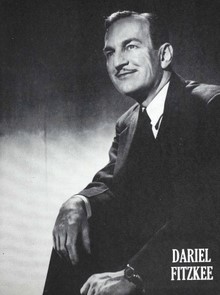
Often, I get asked how many tricks there are (many thousands!), but we can break many down into categories. Much talk among some magicians holds that there were only eight general effects, though this may be a myth, as many pieces do not fit into these narrow categories.
The eight mentioned above are Levitation, Penetration, Prediction, Restoration, Transformation, Transposition, Appearance, and Vanish.
Instead, Magician Dariel Fitzkee, pen name of Dariel Fitzroy (1898–1977), wrote in 1944’s The Trick Brain that we can boil all tricks down to 19 types
Now it’s time to talk about those 19 types of magic. Strap yourself in!
1. Vanish
First on the list: the vanish! Vanishing an object like a coin is often the most iconic thing people think of in magic. If I had a pound for every time a spectator asks me, “Can you make my wife disappear?”, I’d be a wealthy man! Just watch when small children ask you to close your eyes as they quickly put an object behind their back or in a pocket.
Imagine the mentioned glamorous assistant stepping into a wooden box, only to vanish before your very eyes, or a dove held in the magician’s hands vanishes alongside the whole cage. In close-up magic, we may see a coin placed in the magician’s hand, then when he opens it… gone!
Some of the most famous vanishings in history include David Copperfield’s vanishing of the Statue of Liberty. You can see footage of this on YouTube. And you can talk vanishes without mentioning Houdini on the 7th of January 1918, when, performing at the New York Hippodrome made an elephant vanish from a cabinet. Sadly, no film exists showing this miracle.
2. Production
The polar opposite of vanishing is, of course, an appearance, and it’s just as popular. Often linked to a vanish in a routine in which the item, after disappearing, suddenly reappears in a different place. Picture a magician waving his wand over a top hat and suddenly pulling out a white rabbit, or, after making the coin vanish, a simple wave of the hand making it reappear.
3. Transposition
I am sitting here, and you’re sitting there—whichever you may be. A flash of light and smoke… Woo, I am now sitting in your seat, and you are standing on stage in front of everyone! That is transformation—the phenomenon in which two objects change places.
A classic example of a transposition trick is the “Copper and Silver” coin trick: the magician shows a copper coin and a silver coin in each hand and then closes their fists. In the blink of an eye, with their hands open, the coins have seemingly switched places. On stage, a pretty impressive routine is the metamorphosis effect made famous by The Pendragons. It seems impossibly fast! Oh, and skimpy assistant costume alert!!!
4. Transformation
The idea of transformation has captivated humanity for centuries; think of the biblical story of Jesus turning water into wine, medieval alchemists turning lead into gold, and humans turning into werewolves during the full moon. The idea of one thing turning into another is evident throughout nature and culture; the notion of one thing becoming another has always held a powerful allure.
Transformation is a cornerstone of magic — the fairy waves her wand and the pumpkin is now a carriage. In close-up magic, watch as a random playing card changes into your thought-of card, or watch the woman put into a box suddenly turn into a Tiger! It could even be a state change. A cup of water is held, and then the magician pours out a lump of ice.
5. Penetration

OK, stop laughing at the back! Pushing one object through another has long been a staple of magicians.
An assistant (of course, glamorous!) enters a wooden box; the magician then stabs dozens of swords into it… Oh no, has he killed her? No, she steps out unharmed to whoops and cheers…
In close-up magic, you may see them push a pen through a matchbox to discover the box contains a large, solid block of metal, or prepare to be amazed as two elastic bands pass through each other, even while held in your hand!
6. Restoration
One of the most famous restoration tricks is the classic sawing-in-half trick. A person in a box will be sawn in two, with both halves separated, before being restored to normal without a single scar!
The first public performance was by British magician P. T. Selbit in 1921 at the Finsbury Park Empire Theatre in London. Horace Goldin made the arms, legs, and head visible in his 1921 performance, which is the version most are familiar with today. The image shows P. T. Selbit performing this in the mid-1930s. This was taken to extremes with Copperfield’s death-saw, where his whole body is visibly cut in two by a descending electric saw!

A close-up version you may see me perform is a very much scaled-down version with no threat to human health! This is the Torn and Restored Card. This classic card trick involves tearing the card into two, or even four, pieces and restoring it right before your eyes.
7. Animation
Animation gives inanimate objects the power of movement.
Early magicians may have used the power of shadow puppets to create mesmerising shapes on the wall, or to create automata in which human-like machines move without apparent help.
In close-up magic, you may see your wedding ring move in your palm, or a stick figure drawn onto the back of a playing card may move and find your card… Comedy magician David Williams has a great routine where he animates his… raccoon! (You’ll have to see his act to understand the magic!).
8. Anti-Gravity
“Wingardium Leviosa!” Anti-gravity, better known as levitation—the ability to cause an object or person to rise or remain in the air without physical support—is arguably a pretty impressive sight.
A close-up magician will make your wedding ring float between our hands, whilst a stage magician will make a person float in the air. Illusionist David Copperfield is famous for his stage flying routine, in which he somersaults in the air and passes through hoops.
Nevil Maskelyne developed the classic routine in 1900, but it became more widely known in the States through Harry Keller, who named it “The Levitation of Princess Karnac” and first performed it in 1904.

This trick, though, is reputed to have been “borrowed *” from Maskelyne. Keller tried to buy it, but Maskelyne would not sell, so Keller hired someone who had worked with Maskelyne to create his version from Maskelyne’s notes.
* Stolen!
9. Attraction
No love spells here!! In the world of magic, “Attraction” is where a magician becomes endowed with the power of magnetism (no animal magnetism here, guys!).
A magician may hold his finger over the pack of cards, and your selected card will rise from the pack towards his finger. Another time, you may be asked to tap the top of the deck, and your signed selected card keeps rising to the top.
10. Sympathetic Reaction
Sympathetic Reaction is a phenomenon in which two or more objects or people seem to mirror each other’s actions. A card trick known as the Sympathetic Cards involves a red-backed pack of cards mysteriously sorting itself out in the same condition as a mixed-up blue pack. It’s as if the cards are somehow “communicating” with each other!
11. Invulnerability
Imagine being immune to pain and injury! You could be like Superman. Whilst it may sound like a fun dream, magicians have used this theme to create acts.
Many sideshows display superhuman toughness by having performers with nails hammered into their noses or blocks bashed over their heads. When I was part of a stage magic show many years ago, I had my head placed in a box where blades were shoved in and set on fire. I am still here to tell the tale!
12. Physical Anomaly
Fitzkee states that this is an exception to the normal laws of physics or reactions. Bit of a weird one, and the title sounds a little outdated now!
This could be explained, though, in the most famous magic trick of all time. Pretending to remove your thumb. You know that one surely! A lot of other similar types of tricks can be seen in freaky, bizarre types of magic where body parts are stretched, the head twisted around 350 degrees, or, as Fitzkee states, a person’s shadow moves separately from the performer… Peter Pan for real!
13. Spectator Failure
In these acts, a spectator will lose the ability to perform some simple tasks, suggesting that some extraordinary power of the magician is at play. A classic is when the spectator is invited onto the stage, and a magician lifts a box or chest. The spectator can’t budge the objects, no matter how hard they try. Many stage hypnotists may perform this type of material.
14. Control
Telekinesis! Where the mind of the performer seems to direct a subject or move an inanimate object — an example is where a mentalist demonstrates their psychic powers and makes an object inside a see-through sealed box move. Throughout history, many “psychics” have claimed they could do this for real, but of course, they’re using magic tricks!
A well-known example is the sad case of James Hydrick, a former stage performer and self-declared psychic. He attempted to prove his powers on national TV by making a pencil move after it was positioned atop a pedestal and covered by an upside-down aquarium tank. James Randi, the famed magician and sceptic fraudbuster, implemented controls that proved James was a fraud. He later admitted to his fraud.
Things got even worse as he was later charged with a range of crimes, including child molestation, and he remains incarcerated to this day in a psychiatric hospital.
15. Identification
This is a staple of mentalism, where the performer discovers the identity of something written down or chosen. Imagine you have picked a playing card from the pack and shuffled it back in. The magician spreads the pack over the table and points to one card… It is yours, BOOM!!!
16. Thought Reading
Similar to identification, but in this case, the performer reads the thoughts of another person—perhaps the thought of a playing card. Instead of having the pack handed back, you pick a card, shuffle it back in, but keep hold of it. The magician looks into your eyes and names the card and a secret name swirling around your mind. How did they get inside your head!!!
Skilled mentalists pay close attention to body language, facial expressions, and even the slightest hesitations in speech. These seemingly insignificant cues can provide valuable clues about your thoughts and intentions.
17. Thought Transmission
Imagine now, instead of the performer near you reading your mind, the performer’s assistant at the other end of the room names what you have chosen from the magician.
Several acts feature more than one performer and are based on telepathic abilities. Examples include contemporary Victorian/Edwardian-themed performers Morgan & West, as well as one of the most famous acts, the Piddingtons.
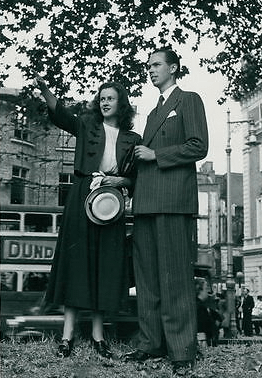
The Piddingtons were a husband-and-wife team, Sydney and Lesley. One BBC broadcast had Lesley kept under armed guard at the Tower of London, across the river from the BBC studios. They still managed to guess items and names from the studio audience.
18. Prediction
A prediction, as the name states, is where the magician has, well, predicted something that will happen later in the show. From sealed envelopes containing future news headlines to anticipating the card a spectator freely chooses, prediction effects leave a lasting impression and are great ways to finish a show. A simple version I might even do is predict what playing card someone picks.
Derren Brown even predicted the Lottery Numbers live on air in one of his shows!
Here is a simple prediction trick you can try yourself.
The Danish Elephant Trick
- Choose a number: Ask someone to secretly pick a number between 1 and 10.
- Multiply by 9: Have them multiply their chosen number by 9.
- Add the digits: Tell them to add the two digits of the result together. For example, if they chose 8, they would multiply it by 9 (8 x 9 = 72), and then add 7 and 2 together (7 + 2 = 9).
- Subtract 5: Instruct them to subtract 5 from the sum they just found.
- Find the letter: Explain that each number corresponds to a letter of the alphabet (1 = A, 2 = B, and so on).
- Think of a country: Ask them to think of a country that starts with the letter they found.
- Focus on the second letter: Tell them to focus on the second letter of their chosen country.
- Think of an animal: Instruct them to think of an animal that starts with the second letter of their country.
- “Guess” the animal: With a little bit of math magic, you can often “guess” the animal they’re thinking of – in this case, it’s likely to be an “Elephant” because many people will think of Denmark.
Bonus – You can alter this to have an orange kangaroo from Denmark. The exact maths gives us Denmark again, but use the last letter to get the animal: the Kangaroo. The previous letter names a fruit—an orange, if all goes to plan. You could also have a backup of the Dominican Republic in your pocket.
- Fun Fact – The Order of the Elephant is one of the highest honours in Denmark!
19. Extra-Sensory Perception
So here we have number 19, the last item on this list! Are you still reading? I knew that… I had a feeling.
ESP is the talent of being able to know information beyond the normal senses. Call it psychic powers if you will.
Common magician and mentalist props include the classic ESP cards, known as Zener cards. Karl Zener created these in the early 1930s, using cards with five shapes: Star, Cross, Wavy lines, Square, and Circle.

A magician may deal the cards face down out on a pile, and the spectator shouts STOP. They name the selected card without them even seeing it.
That’s them all!
“That’s them all! Those are the 19 types of magic tricks Fitzkee named. Of course, there may be more, but this covers a vast range. Sometimes more than one will be used per trick. Different props can be used, and the tricks could be grand illusions or small card tricks, but they all use these principles.
I hope this has been at least slightly informative. Or at least not downright boring! Magic is a fascinating art form with endless possibilities for creativity and entertainment. If you’re curious to learn more, I encourage you to explore further. There are countless resources available online and in libraries to help you delve deeper into the world of magic.
Have you ever been amazed by a magic trick? What’s your favourite type of magic? Share your thoughts and experiences with me. Instagram: yorkshiremagician, Facebook: yorkshiremagician
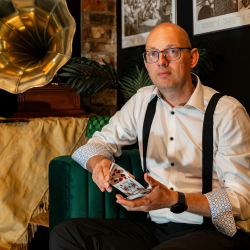
Away from the stage, Adrian holds a Master's degree in Early Modern History from the University of York and occasionally volunteers at York Castle Museum in Victorian costume. When he's not performing magic, you'll usually find him building models, reading, gaming, or exploring his passion for history.